
RDM Weekly - Issue 013
A weekly roundup of Research Data Management resources.


Welcome to Issue 13 of the RDM Weekly Newsletter!
The newsletter is out one day early this week because I am heading to posit::conf(2025)! If you are new to RDM Weekly, the content of this newsletter is divided into 3 categories:
☑️ What’s New in RDM?
These are resources that have come out within the last year or so
☑️ Oldies but Goodies
These are resources that came out over a year ago but continue to be excellent ones to refer to as needed
☑️ Just for Fun
A data management meme or other funny data management content
What’s New in RDM?
Resources from the past year
1. Open Data Impact Award
A very cool initiative coming out of University of Delaware (UD), the Open Data Impact Award recognizes UD researchers who make their data openly available and demonstrate the impact of that openness. Whether you’re an undergraduate just starting your research journey or a seasoned faculty member, this award celebrates commitment to transparency, reproducibility, and public engagement through open data. UD is giving out three awards, $1,000 each. While this is only for researchers affiliated with UD, maybe this will catch on with other institutions as well!
2. Research Highlights: Privacy Attacks on Statistical Data
If you publish many statistics about a sensitive dataset, and these statistics are reasonably accurate, then an attacker can reconstruct part of the original dataset, using only the statistics. This fact, called the Fundamental Law of Information Recovery, is bad news: it means that there is some kind of inherent privacy leakage whenever one publishes information about a dataset. It also means that this leakage still exists even when information doesn't seem too revealing, like aggregate statistics. Through a series of examples, the author of this blog post walks through ways data can be attacked and what we can do to help mitigate risks.
3. What’s in a README? Why Your README Matters, and How to Create the Best One Possible
This blog post from Dryad discusses how README files are a simple but crucial component of data sharing. The post reviews the benefits of READMEs, what information should be included in them, and how to prepare them. It also links to several example READMEs for reference.
4. Why Teachers Say Yes (or No) to Research Participation—and What Researchers Can Learn From It
This article isn’t data management related per se, but if data isn’t collected, we have nothing to manage. As someone who has witnessed the struggle of recruiting participants in schools for research and data collection, I think this could be a really helpful resource to some readers. In this blog post from SRI International, the authors provide findings from surveying about 100 teachers to learn what may encourage or discourage them from participating in research studies. The blog post provides a really helpful table of what to Do and Not Do when recruiting teachers to participate in education research studies.
5. How Third-Party Data Can Strengthen the Strained Federal Data Landscape
The U.S. federal data landscape has experienced major disruptions this year. Many federal datasets and data products have been removed from their respective websites, leading thousands of data users to document and preserve public information, including America’s Data Index, the Data Rescue Project, and the Urban Institute. This article reviews how third-party data offer a promising opportunity to help fill these federal gaps—but careful vetting and additional philanthropic investment is needed to address the limitations of nonfederal data sources.
6. Establishing a Data Culture Using Frameworks to Navigate the Waves of Marine Data
The Marine Institute has worked to establish itself as a trusted source of FAIR (Findable, Accessible, Interoperable, Reusable) data through internationally recognised frameworks such as the Data Management Quality Management Framework and CoreTrustSeal. These have supported the effective handling of complex, multi-stakeholder marine data central to Ireland’s Marine Spatial Planning. This paper presents a summary of these frameworks, and how they have evolved to meet ongoing needs, an analysis of how they fulfill international standards and principles, and lessons learned during their implementation.
Oldies but Goodies
Older resources that are still helpful
1. The Swim Class Checklist
In this blog post, Emilie Schario discusses how checklists help us make our work more efficient. Learning to leverage checklists allows us to lean into the parts of our work that are not process-oriented and require new creativity to solve. She discusses ways that using checklists in our work (including data work) can be used for continuous improvement, helping us refine and document our processes.
2. A General Primer for Data Harmonization
Data harmonization is an important method for combining or transforming data. To date however, articles about data harmonization are field-specific and highly technical, making it difficult for researchers to derive general principles for how to engage in and contextualize data harmonization efforts. This commentary provides a primer on the tradeoffs inherent in data harmonization for researchers who are considering undertaking such efforts or seek to evaluate the quality of existing ones. The authors derive their guidance from the extant literature and their own experience in harmonizing data for the field of COVID-19 public health and safety measures (PHSM).
3. Educational Data Analytics Using R
Educational Data Analytics Using R is a self-paced resource created by a team at the College of Education, Health, and Human Sciences (CEHHS) at the University of Tennessee, Knoxville (UTK). The content assumes no prior knowledge of programming or statistics, making it accessible to a broader audience. Through a series of shiny apps, you can learn foundational skills in R as well as skills in data wrangling and descriptive statistics.
4. A Manifesto for Rewarding and Recognizing Team Infrastructure Roles
The Scientific Reform Movement has highlighted the need for large research teams with diverse skills. This has necessitated the growth of professional team infrastructure roles (TIRs) who support research through specialised skills, but do not have primary responsibility for conceiving or leading research projects (e.g., Lab Technicians, Project Managers, Data Stewards, Community Managers, and Research Software Engineers). This paper explores the evolution of specialist TIRs and the status of these positions in various settings. The authors provide three case study descriptions of TIR activities, so that readers may become more familiar with the breadth and depth of their work. The authors then propose system level changes designed to embed meaningful recognition of all contributions. Acknowledging the contributions of all research roles will help retain skill and expertise, and lead to collaborative research ecosystems that are well-positioned to address complex research challenges.
Just for Fun
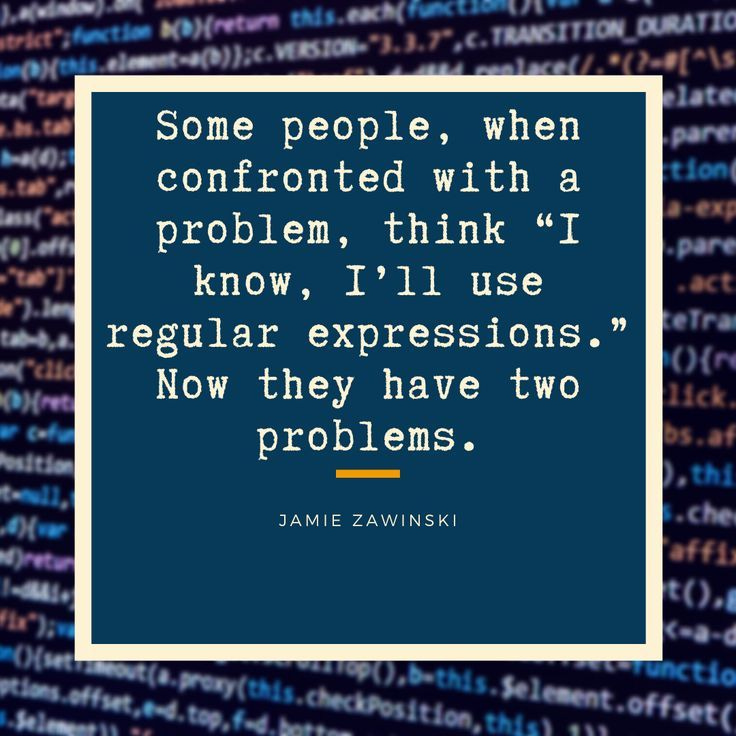
Thank you for checking out the RDM Weekly Newsletter! If you enjoy this content, please like, comment, or share this post! You can also support this work through Buy Me A Coffee.