
RDM Weekly - Issue 032
A weekly roundup of Research Data Management resources.


Welcome to Issue 32 of the RDM Weekly Newsletter!
Happy Love Data Week! ❤️ This week I tried to focus on things going on in the data community that I love to hear about.
The content of this newsletter is divided into 4 categories:
✅ What’s New in RDM?
These are resources that have come out within the last year or so
✅ Oldies but Goodies
These are resources that came out over a year ago but continue to be excellent ones to refer to as needed
✅ Research Data Management Job Opportunities
Research data management related job opportunities that I have come across in the past week
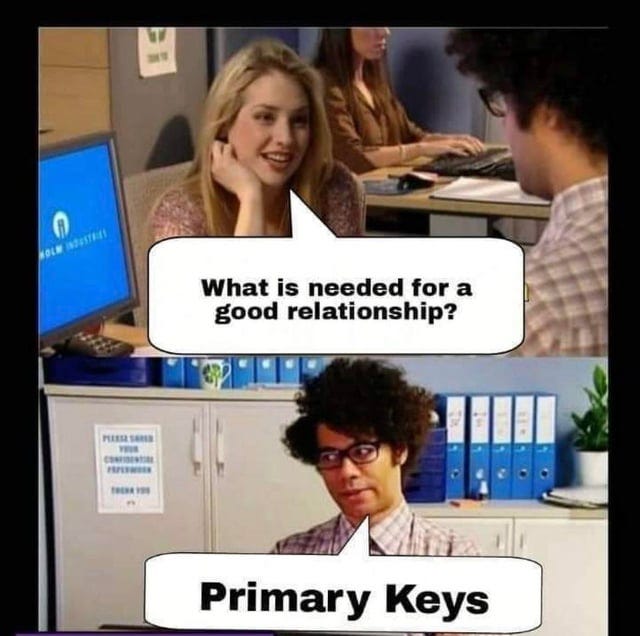
✅ Just for Fun
A data management meme or other funny data management content
What’s New in RDM?
Resources from the past year
1. dplyr 1.2.0
R users may be happy to hear that dplyr 1.2.0 is out now! This large release of dplyr comes with two sets of exciting features that the community has weighed in on, updates to filtering and recoding. The new release introduces filter_out(), the missing complement to filter(), as well as, recode_values(), replace_values(), and replace_when(), three new functions that join case_when() to create a cohesive family of powerful tools for recoding and replacing values. You can learn more about this release in a recent Reddit thread, as well as this blog post that takes the updates on a test run, and this new post that talks about the performance improvements in this new release.
2. American Heart Association Amplifies Impact of Research with Open Policies
The American Heart Association recognizes the value of open practices when it comes to its research investments. Under the umbrella of “open science,” the organization has had both public access and open data policies in place for more than a decade. The nonprofit organization recently updated its website with Open Science Policy Statements for American Heart Association Funded Research and free, downloadable resources including Steps for Open Science Compliance, Sample Data Plans, and a Data Deposit Workbook (heads up - this link will download an Excel workbook). Learn more about how the American Heart Association is helping develop materials and training for grantees to comply with the requirements of its open data policy in this post from SPARC.
3. README Checklist
Created in response to common failure modes the authors encounter as Data Editors for the Review of Financial Studies, this interactive checklist, which also contains best practice examples, can be used to ensure that your README is complete when putting together a replication package. You can also download the review prompt to get detailed feedback from the LLM of your choice.
4. Harvard Dataverse Repository Data Sharing User Story: Creating a Data Sharing Community - The CAFE Climate and Health Research Coordinating Center
This data-sharing use case highlights the CAFE Research Coordinating Center (RCC), a joint initiative of the Boston University School of Public Health and the Harvard T.H. Chan School of Public Health, and its collaboration with the Dataverse Project team at IQSS, Harvard, to develop and sustain a data-sharing environment for its community. It’s both data that was generated internally by the team and data that has been deposited over time by the research community. The community of practice includes over 3,100 individuals, many of which have accessed the data, or downloaded and used the data, as well as deposited datasets of their own into the collection.
5. Tools for Reproducible Data Pipelines
In this talk Theresa Stankov, with the Center for Open Science, discussed her role on the SCORE (Systematizing Confidence in Open Research and Evidence) project. She discussed the many needs of the project, which included keeping track of evolving data, validating and updating the data as needed, and ensuring that project staff have access to the most up to date information. She reviewed the workflow she built using tools such as the {targets} R package as well as Asana to automate as much of the pipeline as possible and ensuring the process was traceable and reproducible.
6. 2025 RDAP Work of the Year Award
This post announces The Data Rescue Project (DRP) as the winner of the 2025 RDAP Work of the Year Award, which recognizes an outstanding publication, program, or other publicly available work related to research data access and preservation. The Data Rescue Project is a grassroots volunteer community dedicated to access to public data for the public good. The DRP enables rapid response efforts for at-risk public data grounded in recognized data stewardship principles. They partner with allied communities of data creators, carers, and their organizations to advocate for sustainable data access. The RDAP award acknowledges the work’s impact on the wider research and scholarly communication ecosystem in support of the RDAP Association’s mission and values.
7. Introducing Open Science in a College of Allied Health Sciences
A few weeks ago I shared the paper Introducing Open Science in Higher Education Settings: A Case Example from a College of Allied Health Sciences. Now the Center for Open Science has published a Researcher Q&A post with the team behind that paper. In this Q&A, team members discuss what motivated the initiative, challenges encountered along the way, how OSF functioned as infrastructure for both research and training, and what others in the scholarly community can take from their experience.
Oldies but Goodies
Older resources that are still helpful
1. Hire a Data Manager
If you were struck by lightning, would other people be able to access and understand your data? Even with the growing open science movement, the expanding requirements for publicly sharing sharing federally funded data, and the ongoing news about data falsification motivating us to produce more accurate, documented, and reproducible data, many researchers are still not able to confidently say “yes” to this question. One solution to this problem is to hire a data manager. This 2023 blog posts reviews what a data manager is, what benefits they can provide, and what you should consider before hiring this role.
2. Moving Toward the FAIR-R Principles: Advancing AI-Ready Data
In today's rapidly evolving AI ecosystem, making data ready for AI-optimized for training, fine-tuning, and augmentation-is more critical than ever. While the FAIR principles (Findability, Accessibility, Interoperability, and Reusability) have guided data management and open science, they do not inherently address AI-specific needs. Expanding FAIR to FAIR-R, incorporating Readiness for AI, could accelerate the responsible use of open data in AI applications that serve the public interest. This paper introduces the FAIR-R framework and identifies current efforts for enhancing AI-ready data through improved data labeling, provenance tracking, and new data standards. You can also read this more recent follow up post on moving from FAIR-R to FAIR².
3. Analysis of Project Management Tools to Support Knowledge Management
Knowledge Management is an essential element for the successful implementation of projects. Due to the temporary nature of the projects and the teams that participate in them, the transfer, integration, and management of knowledge among projects is vital to promote sharing best practices, and to avoid the repetition of previous mistakes, in order to increase the probability of success for the projects and the organization. For this reason, Project Management tools can play a significant role in supporting Knowledge Management. The goal of this 2023 paper was to analyze and evaluate the project management tools of the Gartner Leader quadrant (2019 Gartner Magic Quadrant) regarding their potential for the Capture, Storage, Sharing and Application of knowledge, according to the artifacts in the PMBOK (Project Management Body of Knowledge), and determine which are the best options. Gartner's leader tools were compared to Confluence, referenced as a great choice for knowledge and project document management.
4. Affording Reusable Data: Recommendations for Researchers from a Data-Intensive Project
Scientists are increasingly required by funding agencies, publishers and their institutions to produce and publish data that are Findable, Accessible, Interoperable and Reusable (FAIR). This requires curatorial activities, which are expensive in terms of both time and effort. Based on the AFFORD team’s experience of supporting a multidisciplinary research team, they provide recommendations to direct the efforts of researchers towards affordable ways to achieve a reasonable degree of “FAIRness” for their data to become reusable upon its publication. The recommendations are accompanied by concrete insights on the challenges faced when trying to implement them in an actual data-intensive reference project.
Research Data Management Job Opportunities
These are data management job opportunities that I have seen posted in the last week. I have no affiliation with these organizations.
Just for Fun
Thank you for reading! If you enjoy this content, you can share the love by liking, commenting, or sharing this post! You can also support this work through Buy Me A Coffee. ❤️