
RDM Weekly - Issue 050
A weekly roundup of Research Data Management resources.


Welcome to Issue 50 of the RDM Weekly Newsletter (aka our 1 year anniversary)!
One year ago I had the idea to start a weekly newsletter as a way to more systematically publicly share all of the research data management resources I had collected over the years, as well as the steady stream of new ones I came across each week. At first I worried that keeping up with a weekly newsletter would be a struggle, and that I would run out of resources to share. Yet, a year and 50 issues later, here we are! I am grateful to everyone who has joined me on this ride, and for supporting this work by liking, sharing, and subscribing! Here’s to another great year of learning together! 🎉
The content of this newsletter is divided into 4 categories:
✅ What’s New in RDM?
These are resources that have come out within the last year or so
✅ ICYMI Highlights from Past Issues
For just this issue, rather than doing the usual “oldies but goodies” category, I am highlighting some of the most popular resources shared in the first 50 issues (just in case you missed these!)
✅ Research Data Management Job Opportunities
Research data management related job opportunities that I have come across in the past week
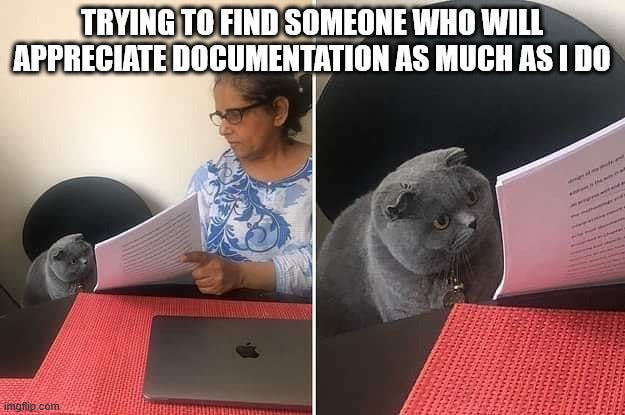
✅ Just for Fun
A data management meme or other funny data management content
What’s New in RDM?
Resources from the past year
1. Hello Data Science
This open access book is intended for anyone who wants to take on their first data science project to look for patterns, relationships, and meaning in data - without being intimidated while still being challenged. The book is currently a work in progress. The first 10 chapters that have been released focus on essential data wrangling skills including transformation, aggregation, joining, pivoting, exploratory data analysis, and more. As education with generative AI use evolves, the authors ideas will too. Their current approach is to start the old school way. The authors want readers to understand the basics before they rely on AI.
2. Framework for the Governance of Indigenous Data: HASS and Indigenous Research Data Commons
The Framework for the Governance of Indigenous Data, from the Australian Research Data Commons, is a guide for the ethical, inclusive, and effective management of Indigenous data within the Humanities, Arts, Social Sciences and Indigenous Research Data Commons (HASS and Indigenous RDC). It responds to long-standing calls from Aboriginal and Torres Strait Islander communities for greater control over data that affects their lives, lands, cultures, and futures. The Framework is the result of extensive consultation, co-design, and collaboration with Indigenous data custodians, researchers, institutions, and policymakers. It is intended to be adopted across all HASS and Indigenous RDC activities. The Governance Model identifies 5 foundational elements which underpin the Framework’s guidelines and practices, which provide actionable strategies for institutions and communities to embed Indigenous governance across the data lifecycle.
3. CREATE-EBP Researcher Technology Survey Results
Researchers increasingly use technology and digital tools in school-based research. Few studies have systematically examined how these tools are used in school-based settings. The CREATE-EBP study documents researchers’ use of participant-facing technology and digital tools, related challenges, lessons learned, and future possibilities. 69 school-based researchers participated in this exploratory study. Participants completed an anonymous online survey about technologies and digital tools used in school-based research. The survey included close-ended and open-ended questions to examine both patterns of use and researchers’ experiences. This summary document highlights preliminary findings from this study.
4. What Makes a Good Data Steward?: Beyond Data Management Skills
These are slides from a presentation at the DANS Open Day 2026. How do we train data professionals in the ‘transversal’ or ‘soft’ skills that they need to conduct their tasks and responsibilities effectively. Why? What? How? When? The presentation showcases the RDNL (Research Data Netherlands) Competency Framework for data professionals and explains how transversal skills fit within this. It briefly outlines some of the training initiatives that aim to address some of the already-identified training gaps that exist in relation to transversal skills.
5. FAIR Data Principles in Energy Research: An Empirical Analysis on Current Practices, Researcher Attitudes, Application Barriers and Practical Implications
For a successful energy transition, the FAIR data principles provide an essential framework for managing and reusing energy related data for research, yet their implementation remains limited. In this explorative study, the authors empirically examine how energy researchers engage with energy data in relation to FAIR data principles, research data platforms, and open science practices, while acknowledging the diversity of the energy research community. Fifteen semi-structured expert interviews and a workshop with eight researchers were conducted, complemented by an explorative (typifying) qualitative content analysis. The study’s indicative results reveal key characteristics of the energy research community as perceived by the interviewees, which is marked by a strong inter- and transdisciplinary orientation as well as a pronounced normative orientation towards fostering a just energy transition. Furthermore, the author’s identify five attitude types towards FAIR data principles (1) Enthusiasts, (2) Idealists, (3) Pragmatists, (4) Strategists, and (5) Resisters along with perceived barriers to their application on the micro (individual), meso (institutional), and macro (systemic) levels. The authors discuss specific measures to overcome these barriers for (i) publishers and funding agencies, (ii) research institutions, and (iii) platforms addressing different levels of the research landscape.
6. OSF Essentials: Monthly Deep Dive
These free webinars, occurring on the last Thursday of every month, are focused sessions on different OSF topics, built around the questions, workflows, and practical needs users most often want help with. The next monthly deep dive is “Licensing Basics on the OSF”, occurring Thursday June 25th at 10am central time.
7. What to Say When They Ask You About Research Culture
This article is aimed at helping researchers confidently answer questions about research culture, including questions that increasingly appear in job interviews, funding applications, REF submissions, and conference panels. It breaks down the concept by encouraging researchers to reflect on their own values and ambitions, then connect those to their institution's priorities and sector-wide frameworks, using the University of Glasgow's five research culture priorities (Research Recognition, Collegiality and Teams, Research Integrity and Ethics, Open Research, and Career Development) as a structural anchor. The piece emphasizes that articulating one's contribution to a positive and inclusive research culture is increasingly tied to funding success, and that every researcher has a genuine role to play in shaping the culture around them.
ICYMI Highlights From Past Issues
Some of the most popular resources shared in the past year of RDM Weekly
1. Checklist for Reusable Code (From Issue 48)
Reusable code is well-documented, human-readable, portable, organized, and version-controlled. Creating reusable code helps you, your collaborators, and the broader open science community by making your work easier to understand, adapt, reproduce, and cite. Use this quick checklist from Cornell Data Services for a fast self-check when sharing code for your project. For more guidance and recommended practices for each item, the site also includes an expanded checklist.
2. Bare Necessities of Data Management (from Issue 20)
There are so many data management practices that can help you better organize your project, yet a team’s ability to “do it all” is really limited by factors such as funding, timing, team size, and expertise. Therefore, it is important for teams to consider what practices are feasible as well as which ones will give them the largest return on investment. This blog post reviews a list of core practices that many teams can implement early on in a project that will lead to better data outcomes.
3. Ten Simple Rules for Effective Research Data Management (from Issue 37)
Advances in information technology, digitalization, database volume, the internet, high-throughput measurement technology, and artificial intelligence (AI) have profoundly transformed research. In the 20th century, it was common for a study or an experiment to yield one single file (e.g., a table). Today, many research projects yield many files, often created by multiple collaborators and are often valuable for secondary use. Furthermore, scientific knowledge is currently generated not only through hypothesis-driven statistical inference but also using (un)supervised data mining and AI techniques applied to existing resources. These developments require effective research data management (RDM) at both project and institutional level. Several publications of the “Ten Simple Rules” series offer guidance on RDM subdomains. However, they focus on project-related RDM topics. Thus, this Ten Simple Rules for Effective Research Data Management provides a condensed reference of significant RDM topics applicable at higher organizational levels, arranged in a logical sequence corresponding to the research data life cycle. The rules are derived from the authors’ diverse expertise in statistics, genomics, bioinformatics, public health, epidemiology, and research data management consulting. They may serve as a reference for institutions, researchers or professionals regardless of field or career level.
4. How to Make a Data Dictionary (from Issue 29)
A data dictionary is critical to making your research more reproducible because it allows others to understand your data. The purpose of a data dictionary is to explain what all the variable names and values in your spreadsheet really mean. This brief tutorial, from the Center for Open Science, walks you through what fields to consider including and provides an example data dictionary.
5. READMEBuilder (From Issue 44)
REAMEBuilder is a Shiny application that walks researchers through building a high-quality README file for research datasets and code. It automatically describes tabular data columns (ranges, levels, NAs), detects R package dependencies from scripts, supports script run-order documentation, and exports a formatted README.md.
6. Reproducible Code Guide (from Issue 28)
This guide, from the British Ecological Society, covers the basic tools and information you need to start making your code more reproducible. Most examples are in R and Python, with a few in Julia, but the tips should apply to any programming language. It covers aspects that fall within the reproducibility ecosystem — Documentation, Automation, and Structure.The guide encourages you to start by implementing one or more aspects of this guide and then continue building on your practices over time to improve the reproducibility of your code and research.
7. Readable, Reliable, Reusable: A Guide to Clean R Code (from Issue 16)
Clean code is code that can be easily understood—by everyone on the team, and by future you. It’s readable, maintainable, easier to debug, and scalable. But writing clean code isn’t automatic—it’s a skill that improves with practice, reflection, and shared standards. In this blog post, Jacci Ziebert shares practical tips and examples for writing clean R code. Many of these ideas are inspired by Robert C. Martin—aka “Uncle Bob” in his book Clean Code and adapted to fit the patterns and challenges of R programming. The blog focuses on three key areas: naming practices, function practices, and commenting practices. These aren’t just stylistic preferences—they’re tools for building code that lasts.
Research Data Management Job Opportunities
These are data management job opportunities that I have seen posted in the last week. I have no affiliation with these organizations.
Just for Fun
Sponsor
This newsletter is supported in part by the Eunice Kennedy Shriver National Institute Of Child Health & Human Development of the National Institutes of Health under Award Number R25HD114368. The content is solely the responsibility of the author and does not necessarily represent the official views of the National Institutes of Health. Read more about the NIH Data Management for Data Sharing Workshop Project.
Thank you for reading! If you enjoy this content, please like, comment, or share this post! You can also support this work through Buy Me A Coffee.